
Nobody Was Taught This, and Nobody Owns It
PLAY THE EPISODE
29 min · Listen on Apple Podcasts · Spotify · YouTube
Show Notes
Three clinicians. Three different buildings. Every test normal. And a growing suspicion that the problem must be you.
It isn't. Dr. Siân West, board-certified OB-GYN and Menopause Society Certified Practitioner, explains why so many women in their forties and fifties keep hitting the same wall, and why the reason is structural rather than personal.
Menopause was never given real space in medical training, and no specialty in American medicine owns it. So when perimenopause shows up as anxiety, joint pain, a stiffening shoulder and broken sleep, those symptoms get split across four specialists, investigated properly, and returned as four normal results. Nobody's job is to look at all four together and ask what explains them at once.
What you'll learn
What OB-GYN residency actually teaches about menopause, from someone who did it
Why compressing a curriculum takes menopause from nothing down to nothing
Why teaching menopause as an event, the date your periods stop, makes perimenopause invisible
The four-door pattern: anxiety to therapy, shoulder to orthopedics, moving joint pain to rheumatology, sleep to a sleep study
Why nobody owns a normal result
Why a basic workup still matters, and what the pellet clinics are selling
How to find a clinician who treats menopause rather than one who simply prescribes hormones
Three questions you can ask on the phone before you ever book
One thing to do before your next appointment: write down when each symptom started. Not how bad it is. When it started. On one page, four separate problems start to look like a shape a clinician can recognize.
Questions this episode answers
Why doesn't my doctor know much about menopause?
For most clinicians it was never taught. In a survey of residents across family medicine, internal medicine and obstetrics and gynecology, 6.8 percent said they felt adequately prepared to manage women going through menopause (Kling et al, Mayo Clinic Proceedings, 2019). In the same survey, more than 90 percent said that training in menopause management was important. The gap is in what clinicians were given, not in whether they care.
How much menopause training do doctors get in residency?
Less than most people assume. A 2023 survey of US obstetrics and gynecology residency program directors found that only 31.3 percent of responding programs had a dedicated menopause curriculum (Allen et al, Menopause, 2023). Among the programs that did have one, all reported five or fewer menopause lectures a year and about 71 percent reported two or fewer.
Which medical specialty owns menopause care?
None does, in the way other conditions have a specialty home. Gynecology has the strongest claim but has historically organized itself around reproduction. Primary care sees more menopausal women than anyone but is holding many other things in a short appointment. Cardiology, psychiatry, rheumatology, urology, sleep medicine and orthopedics each take a piece of it. No single specialty is accountable for the whole.
What does MSCP stand for?
Menopause Society Certified Practitioner. It's a credential awarded by The Menopause Society to licensed healthcare professionals who pass a competency examination in menopause and midlife women's health. It's voluntary and taken after training is finished, and it's valid for three years, maintained by re-examination or continuing education. It was called NCMP before the Society changed its name in 2023.
Do I need a certified menopause practitioner?
Not necessarily. The credential tells you someone chose the subject deliberately, which is useful when you're starting from nothing in a new city. Its absence tells you very little, because plenty of clinicians treat menopause well and never sat the exam. The Menopause Society's Find a Menopause Practitioner directory is searchable by location and lists Society members as well as certified practitioners, so look for the MSCP letters specifically. Treat it as a starting point rather than a filter you apply to everybody else.
Why do all my tests come back normal when I still feel terrible?
A normal result rules out what that particular test was looking for. It doesn't explain what you're feeling. When symptoms get split across several specialists, each one investigates its own question and closes its own door when the answer is no. Nobody is assigned to look at several normal results together and ask what explains all of them at once, and that is usually the question that hasn't been asked.
Is it normal to be referred to several different specialists?
It's common, and each referral is usually defensible on its own. Anxiety goes to therapy or medication, a stiffening shoulder goes to orthopedics or sports medicine, joint pain that moves around raises a reasonable question about autoimmune disease, and broken sleep gets a sleep study. The problem isn't any one of those decisions. It's that nobody is responsible for the picture they make together.
Can perimenopause explain several unrelated symptoms at once?
It can, and that's worth asking directly when a run of investigations has come back normal. This isn't a claim that every symptom in midlife is hormonal, and a basic workup still matters. But if you've had several normal results, a reasonable question to put to a clinician is whether all of it together could be perimenopause.
Does poor sleep make pain worse?
Yes. Experimental studies show that depriving healthy people of sleep lowers their pain threshold. A woman who isn't sleeping is likely to experience aching more intensely than she would if she were sleeping, whatever started the aching. Cause and effect can't be cleanly untangled here, which is a reason to raise sleep early in an appointment rather than mentioning it last as an aside.
Does brain fog in perimenopause get better?
For most women it appears to be time-limited. In the SWAN cohort, perimenopause was associated with a transient decrement in processing speed and verbal memory that resolved in postmenopause, with improvement rebounding to premenopausal levels (Greendale et al, Neurology, 2009; Greendale et al, American Journal of Epidemiology, 2010). Sudden or marked cognitive change is a separate matter and should be assessed rather than attributed to menopause.
How long do hot flashes and night sweats last?
Longer than most women are told, and they don't reliably stop when periods do. In the Penn Ovarian Aging Study, women had moderate to severe vasomotor symptoms for a median of 10 years. In SWAN, frequent symptoms lasted a median of 7 years, 4.5 of those after the final menstrual period, and most Black women in those studies had them for more than a decade. For a minority they continue considerably longer.
Should I have a workup before starting treatment for menopause symptoms?
Yes. Fatigue, night sweats, aching and unintentional weight loss overlap with thyroid disease, anemia, diabetes and, less commonly, other conditions. A clinician who tells you everything you're feeling is hormonal within a few minutes of meeting you hasn't looked. "It's probably your hormones" is a conclusion you reach after checking, not instead of checking.
What's the concern with hormone pellet clinics?
Two things. Some skip the basic workup and go straight to treatment, which costs months if something else is going on. And compounded hormone products, including pellets, are not FDA regulated. Menopause guidance cites concerns about quality, purity, potency and consistency, with significant variability between formulations and between batches of the same formulation.
Is MHT the only treatment for menopause symptoms?
No. MHT is a good option and it's underused, but it isn't the whole toolkit. Non-hormonal prescription medications for hot flashes exist and matter for women who can't take estrogen or don't want to. Genitourinary symptoms have their own specific treatment, separate from systemic therapy. Cognitive behavioral therapy for insomnia has excellent data for insomnia, though it won't treat sleep apnea. Strength training matters for bone and muscle. Depression, where that's what it is, should be treated as depression.
What should I ask before booking with a new clinician?
Three questions, all of which can be asked by phone. What did their training in menopause consist of? What do they offer besides hormone therapy? Would they want any workup before starting treatment? An honest answer to the first, even an unflattering one, tells you something good about them. A thin answer to the second tells you what kind of practice it is. You want a yes to the third.
What should I bring to my appointment?
A timeline. Write down when each symptom started, not how bad it is. Specialists each receive one symptom. None of them receives the fact that the shoulder, the sleep and the mood all began within about eighteen months of each other while your periods were changing. Put on one page, it stops being several separate problems and starts being a shape a clinician can recognize.
What if three clinicians have all given me the same answer?
That tells you something real, and it isn't about how you're describing it. Rephrasing the same conversation a fourth time with the same kind of clinician is unlikely to change the outcome. The better use of that effort is finding someone who chose this subject deliberately.
Resources and research mentioned
Kling et al., 2019, Mayo Clinic Proceedings, menopause knowledge among family medicine, internal medicine and OB-GYN residents
Allen et al., 2023, Menopause, menopause curricula in US OB-GYN residency programs
Greendale et al., 2009, Neurology, SWAN, cognitive changes across the menopause transition
Greendale et al., 2010, American Journal of Epidemiology, SWAN cognitive follow-up
Penn Ovarian Aging Study and SWAN, on how long hot flashes and night sweats last
Menopause Practice: A Clinician's Guide, 6th Edition, The North American Menopause Society
Find a menopause-trained clinician: The Menopause Society's Find a Menopause Practitioner directory (look for the MSCP credential)
Related episodes
About Dr. Siân West
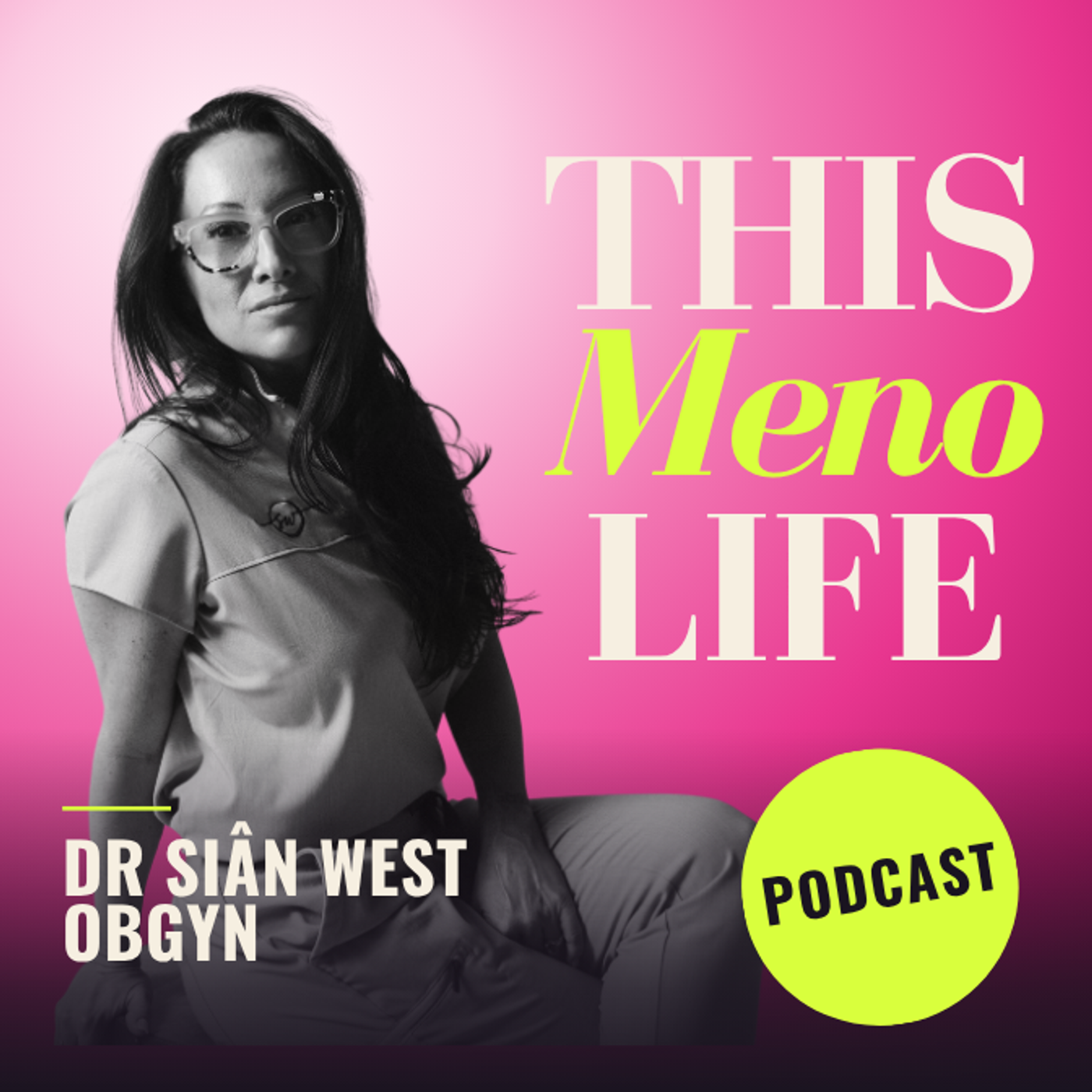
Dr. Siân West is a board-certified OB-GYN and menopause specialist. She hosts This Meno Life, a weekly podcast for women in midlife that covers perimenopause, menopause and MHT with the evidence first and no fear tactics.
Follow This Meno Life on Apple Podcasts, Spotify or YouTube so the next episode finds you.
I'm a doctor, but not your doctor. Everything here is for education, not medical advice. Stay curious, stay evidence-based, and always talk to your clinician before making changes.
